1. What Makes Seoul Gwangjang Market Special?
Seoul Gwangjang Market is an icon among the best markets in Seoul, and a living museum of Korean culture and history. Founded in 1905, it’s not only Seoul’s oldest market but also one of the largest traditional Korean markets.
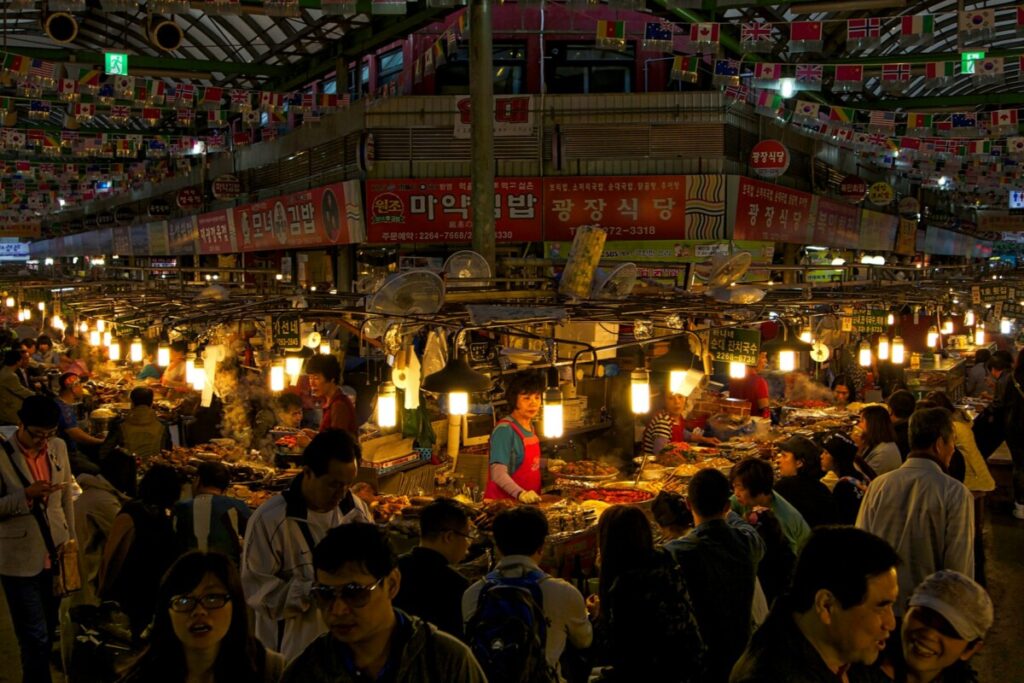
The name Gwangjang means “to gather and keep together,” reflecting its role as a hub for people and goods from all over Korea.
Today, Seoul Gwangjang Market is world-famous for its food alleys, bustling textile section, and authentic vibe. Visitors can enjoy crispy bindaetteok (mung bean pancakes), addictive mayak gimbap, sweet hotteok, or browse vintage fabric shops and hanbok rentals.
2. TL;DR for Busy Travelers
- Best for: Street food & late-night eats
- Must-try dishes: Bindaetteok, mayak gimbap, yukhoe, hotteok, tteokbokki, makgeolli
- Where: Jongno-gu, central Seoul (Subway: Jongno 5-ga, Exits 7/8/12)
- Local Tip: Visit in the evening for the night market vibe. Bring cash for stalls.
3. Quick Picks: Seoul Gwangjang Market at a Glance
| Feature | Details |
|---|---|
| Specialty | Street food, textiles, hanbok rentals |
| Must-Try Food | Bindaetteok, mayak gimbap, hotteok, yukhoe |
| Highlights | Historic, authentic, bustling night market |
| Subway Station | Jongno 5-ga (Line 1), Exits 7, 8, or 12 |
| Best Time to Visit | Weekday mornings, late afternoons, evenings |
4. Where Is Gwangjang Market in Seoul?
Seoul Gwangjang Market is centrally located in Jongno-gu, making it easy to reach from landmarks like Gyeongbokgung Palace, Changgyeonggung Palace, and Dongdaemun Design Plaza.
- Address: 88 Changgyeonggung-ro, Jongno-gu, Seoul
- Subway: Jongno 5-ga Station (Line 1, Exits 7–12), 3 min walk
- Alternative: Euljiro 4-ga Station (Line 2/5, Exit 4)
- Bus: 101, 103, 143, 201, 260, 370, 720, 721
- Taxi: Say “Gwangjang Sijang (광장시장)”
5. What to Eat at Seoul Gwangjang Market
Food is the soul of Seoul Gwangjang Market. Here are the must-eats:
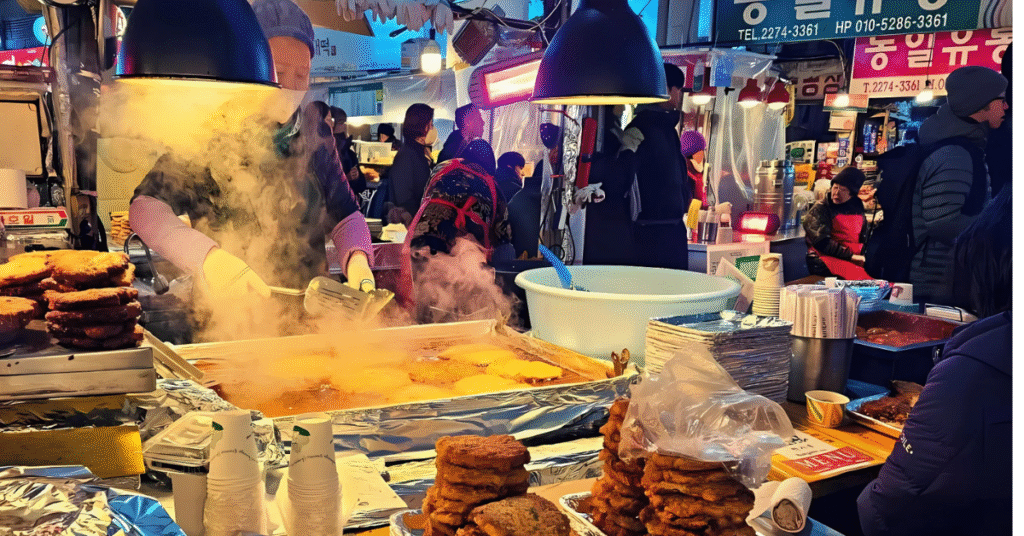
- Bindaetteok: Crispy mung bean pancakes, fried fresh at dozens of stalls
- Mayak Gimbap: Bite-sized rolls with mustard dip—addictive and iconic
- Yukhoe: Korean beef tartare, marinated with sesame oil & spices
- Tteokbokki & Sundae: Classic Korean street food favorites
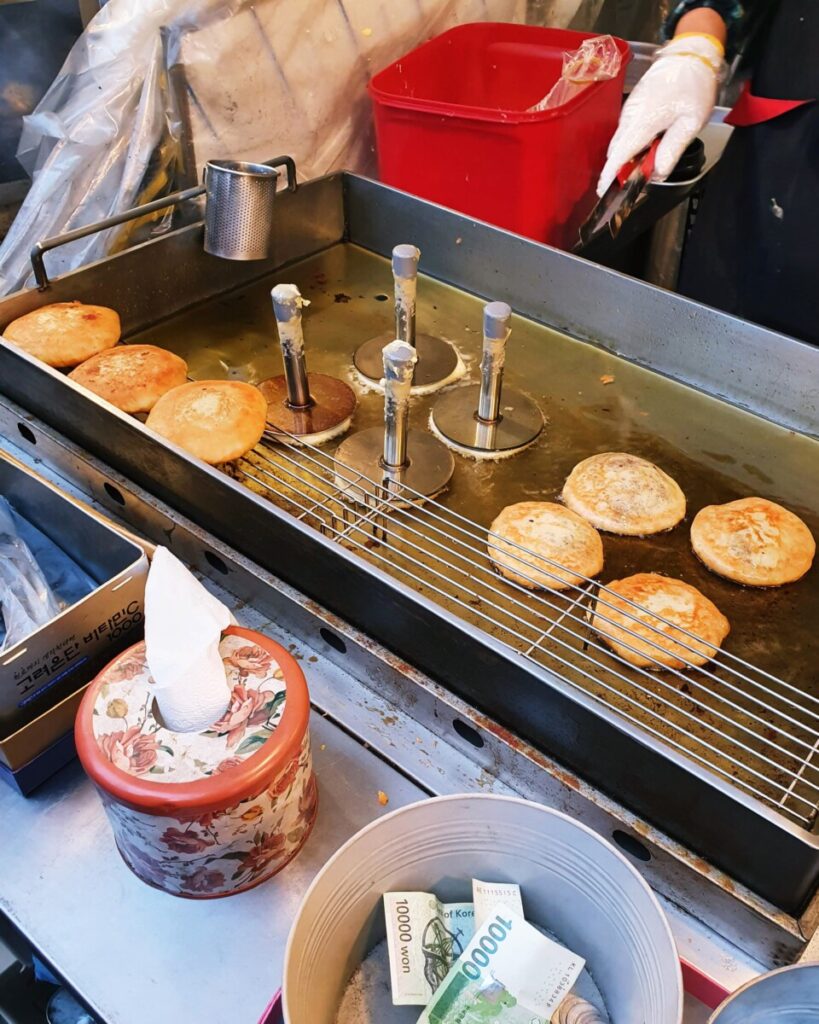
- Hotteok: Sweet Korean pancakes filled with brown sugar, cinnamon, and nuts. Especially popular during colder months, they’re a comforting treat that balances the market’s savory offerings.
- Makgeolli: Traditional rice wine, best enjoyed at pojangmacha tents with locals
6. Beyond Food: Shopping & Culture
Beyond eating, Seoul Gwangjang Market is a treasure trove for:
- Vintage textiles and hanbok (buy or rent for photo shoots)
- Unique souvenirs like bojagi (wrapping cloths)
- Upper-floor fabric shops selling silk, linen, and vintage pieces
7. Local Tips & Insider Advice
- Best Time: Weekday mornings (quiet) or evenings (night market vibe)
- Cash vs Card: Bring cash for stalls; bigger shops may accept cards
- Local Favorites:
- Stall #70 Gohyang Kalguksu (featured on Netflix’s Street Food: Asia)
- Bindaetteok Alley—follow the sizzling aroma
- Hotteok vendors near the main gate—perfect sweet ending to your street food crawl
- Instagram Spots: Neon-lit alleys, sizzling pancakes, hanbok shops
8. Why Both Locals & Tourists Love It
Koreans cherish Gwangjang Market for its affordability, history, and sense of community. Tourists love its welcoming vendors, unique souvenirs, and chance to try authentic Korean street food like hotteok and bindaetteok.
Exploring Seoul Gwangjang Market means diving deep into the essence of Korean culture—food, history, and people. From sizzling bindaetteok and chewy tteokbokki to sweet hotteok and makgeolli toasts, it’s a must-visit spot where locals and travelers share unforgettable experiences.
If you enjoyed this guide, you’ll also love these: